Summer School in Digital Human Rights
Intensive course taught by leading experts in the field
The Faculty of Law and the Raoul Wallenberg Institute for Human Rights at the University of Lund conducted a Summer School in Digital Human Rights in Lund, Sweden 22-26 June 2026. This was a residential, advanced, and intensive course on the application of international human rights law in the digital age, and was taught by leading experts in the field.
I would like to express my profound gratitude for this course. As a human rights practitioner, I found it incredibly useful and motivating to discuss and reflect upon the intersection of such critical topics as freedom of expression, privacy, AI, and surveillance.
Topics covered
- Privacy in the digital age
- Freedom of expression online, including on social media platforms
- Businesses and human rights in the cyber context
- The regulation of artificial intelligence from a human rights perspective
- Freedoms of thought and opinion in the context of AI manipulation
- Electoral interference and other hybrid threats to democracy
- International treaties on cybercrime and their human rights implications
It was truly a pleasure to be part of such an inspiring environment. Everything, including overall organisation of the course was amazing!
Course teaching methods and faculty
The course included interactive seminars and group exercises, as well as conversations with practitioners on their work in the field of digital human rights. The course faculty included experts from the University of Lund, as well as distinguished external experts.
Professor Jessica Almqvist is Professor of International Law and Human Rights and Deputy Dean for Research at Lund University Faculty of Law. She is also the Deputy Coordinator of the Human Rights Profile Area and Academic Director of the Master's Programme in International Human Rights Law at the University. She is also a non-resident Research Fellow at the Royal Elcano Institute in Madrid. She has worked extensively on human rights and security.
Ms Chantal Joris is the acting Head of Law and Policy at ARTICLE 19, an international human rights organisation dedicated to protecting and promoting the right to freedom of expression and information around the world. Her work focuses on freedom of expression in armed conflicts and digital rights.
Professor Marko Milanovic is Professor of Public International Law at the University of Reading School of Law, as well as the Raoul Wallenberg Visiting Chair of Human Rights and Humanitarian Law, University of Lund. He is co-general editor of the ongoing Tallinn Manual 3.0 project on the application of international law in cyberspace. Professor Milanovic is the Special Adviser on Cyber-Enabled Crimes to the Prosecutor of the International Criminal Court. He is an Academic Expert at Doughty Street Chambers.
Dr Alberto Rinaldi is Senior Lecturer at the University of Lund. His work bridges traditional legal scholarship with emerging disruptive technologies (EDT) and artificial intelligence (AI) in the context of global conflicts and of evolving security challenges.
Dr Alexander Seger worked for the Council of Europe from 1999 to 2025, where from 2011 he was responsible for the framework of the Convention on Cybercrime (“Budapest Convention”), including as Executive Secretary of the Cybercrime Convention Committee in Strasbourg and as Head of the Cybercrime Programme Office of the Council of Europe in Bucharest, Romania.
Dr Sue Anne Teo is a Researcher at the Raoul Wallenberg Institute of Human Rights and Humanitarian Law (RWI) and a Technology and Human Rights Fellow at the Carr-Ryan Center for Human Rights Policy at the Harvard Kennedy School. Sue Anne’s primary research interest lies in examining the relationship between human rights, artificial intelligence and emergent vulnerabilities. She is the Principal Investigator of the research project 'Anthropomorphic AI and Emergent Vulnerabilities' which looks into risks posed by human-like AI chatbots.
Professor Philippa Webb KC is Professor of Public International Law at the Blavatnik School of Government, University of Oxford. She is Co-founder and Director of the Oxford Institute of Technology and Justice. She is also a Fellow of Exeter College, Oxford, and a barrister at Twenty Essex chambers.
Contact
summerschool [at] jur [dot] lu [dot] se (summerschool[at]jur[dot]lu[dot]se)
+46 46 222 11 26
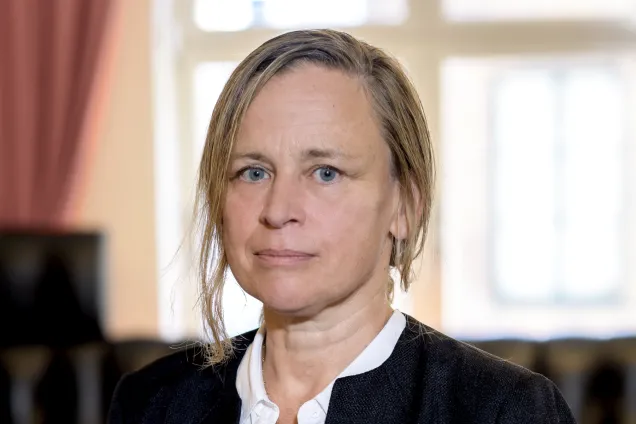
Director Jessica Almqvist
Professor of International Law and Human Rights

Director Marko Milanovic
Professor of Public International Law

Pufendorf Hall
This was an incredible and genuinenly transformative experience on many levels.

Swedish Fika between lectures
Honestly everything about it was brilliantly done.